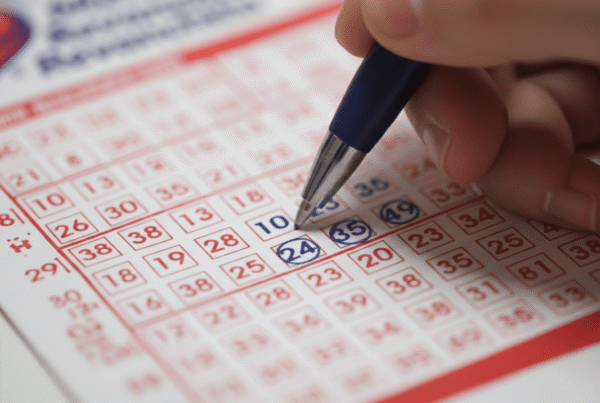
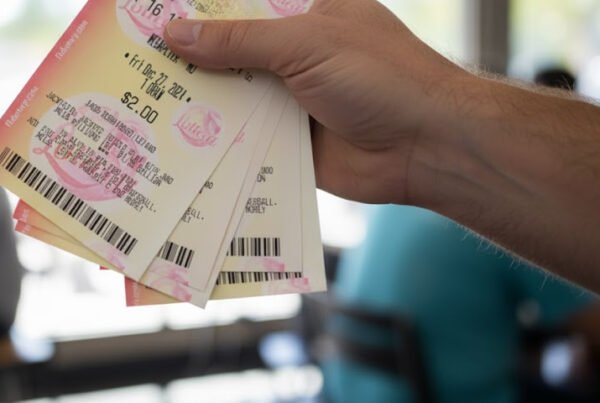
There are two ways to find a lottery ticket. One is in the pocket of a coat you haven’t worn since winter. The other is on the floor next to the counter at a gas station. The legal question sounds identical — can I cash this? — but the answer is not.
The short answer
If the ticket is yours and you simply forgot about it, yes: all that matters is whether the claim window has closed. If you found it, the honest answer is that you probably can cash it and probably shouldn’t. Those two things don’t contradict each other, because the rule that decides who gets paid and the rule that decides who owns the money are different rules.
Why an unsigned ticket works like cash
State regulations say this in plain language. Virginia defines a ticket issued by a licensed retailer as a bearer instrument until it has been signed, and treats whoever signs it as the owner. Oregon’s rule is almost word for word the same: until a name is written on the ticket, it belongs to whoever is holding it. South Carolina says the same thing again.
That is where the standard advice comes from — sign the back the moment you buy it. Lose an unsigned winning ticket and the finder can legally present it for payment, and there is very little you can do about it.
Colombia works the same way. A Baloto ticket is a bearer document and the operator pays whoever presents it, which is exactly why players are told to sign the back with their name, ID number and phone.
But “payable” is not the same as “yours”
This is where most articles on the subject stop, and it is the part that matters. The lottery paying you does not mean the money belongs to you.
Property law splits found items into three categories. Lost property is what an owner parts with unintentionally — a ticket that slips out of a pocket. Mislaid property is deliberately set down and forgotten, like a ticket left on a store counter. Abandoned property is what an owner intentionally gives up, like a losing ticket dropped in the bin.
The distinction decides everything. For lost and mislaid property the original buyer keeps their legal claim. The finder holds a right that beats everyone except the true owner. And a winning ticket is almost never treated as abandoned, because abandonment requires proof that someone knowingly gave up something they knew had value.
The practical consequence is blunt: knowingly claiming a prize on a ticket that isn’t yours can be prosecuted as theft or fraud. And large prizes are not claimed anonymously — there are cameras, claim forms, photo ID and serial verification at every step.
What to do if you found one
Check it before you decide anything. The overwhelming majority of discarded tickets are losers. You can check without claiming anything against our Powerball previous results, Mega Millions previous results, Baloto or Melate pages.
If it is signed, there is nothing to think about. It has a named owner. Hand it in at the retailer or call the lottery’s hotline.
If it is unsigned and the prize is small, your legal position is exactly the same even though nobody will ever investigate. The question simply stops being legal and becomes personal.
If it is unsigned and the prize is large, talk to a lawyer before you do anything. That is not an overreaction. If the buyer comes forward later they will try to prove the purchase through the receipt, store footage or a digital play record — and those trails exist more often than people assume.
The far more common case: the ticket was yours
This is the real situation for most people searching this question. You didn’t find a stranger’s ticket. You found your own, months later, in a coat or a glovebox.
Then only one thing matters: the deadline. Powerball and Mega Millions run from 90 days to a year depending on the state where you bought it. Baloto gives 365 days. Melate gives just 60 calendar days. We break all of it down in our guide to how long you have to claim a lottery prize.
If the window has already closed there is no appeal and no exception. The money goes to state funds in the US, to the health system in Colombia and to public assistance programmes in Mexico.
How to stop this from happening again
Sign the ticket when you buy it, not when you discover you won. Buying it is the one moment you know for certain that you are holding it.
And stop relying on memory. Register your numbers for Powerball, Mega Millions, Baloto or Melate and you get an alert when you win, even if the paper is still in a coat pocket. That turns a forgotten ticket into a logistics problem instead of a lost prize.
The bottom line
An unsigned ticket behaves like cash: whoever presents it gets paid. But that describes how the lottery pays out, not who owns the money. If you found one, checking it costs nothing — cashing it knowingly can cost a great deal. And if the forgotten ticket is your own, the only thing working against you is the clock.